
When Peak Season Runs Long: Why Holiday Inventory Strategy Can’t Wait
When Inventory Timing Matters as Much as Volume
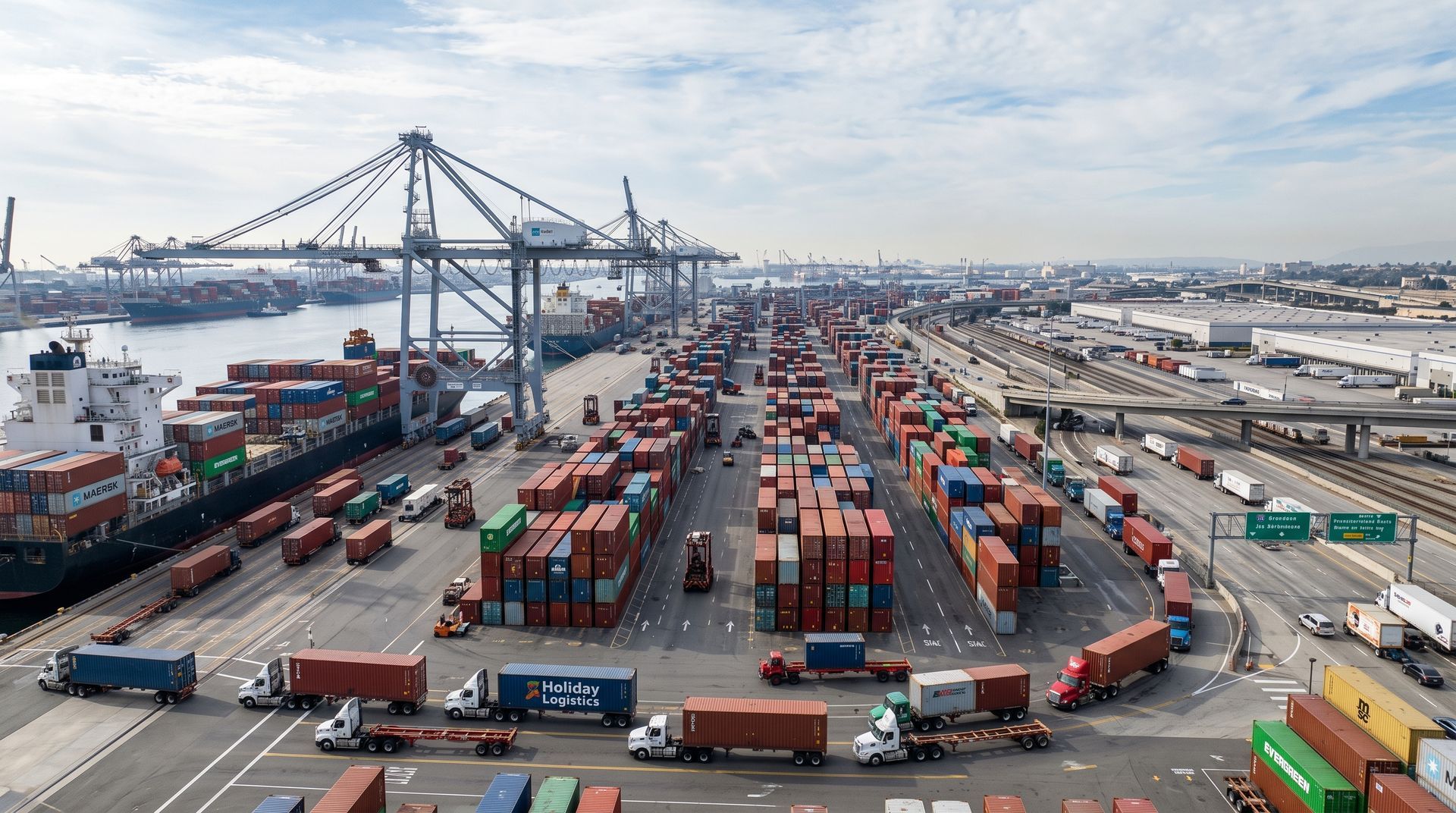
Peak shipping season is supposed to help retailers prepare for the holidays. But when peak season runs longer than expected, it can also create new inventory pressure.
That is the situation many retailers are managing this year.
The National Retail Federation reported in September that the import cargo peak season was “not over yet,” with a final bump expected that could make September the busiest month of 2026 for import volume at major U.S. container ports. NRF and Hackett Associates said the extended season reflected a combination of timing, delayed shipments, tariff-related planning, and other supply chain pressures.
S&P Global also reported that storm-related vessel delays in China and Panama Canal draft restrictions were contributing to an extended peak shipping season, with September forecast to surpass July’s year-to-date import high.
For retailers, manufacturers, and distributors, that kind of disruption does not simply affect transportation planning. It affects inventory strategy.
Holiday merchandise does not arrive in a vacuum. It arrives in warehouses, distribution centers, and retail backrooms — and must fit into promotional calendars that are already under pressure. When goods arrive late, in larger quantities, or in unexpected waves, companies have less time to decide what belongs in the primary channel, what needs promotion, and what may need to move through secondary markets before value begins to erode.
In a compressed holiday season, inventory timing matters as much as inventory volume.
The Holiday Inventory Window
Holiday inventory decisions often begin months before consumers start shopping in earnest. Retailers forecast demand, place orders, plan promotions, reserve freight capacity, and build assortments long before the fourth quarter.
But the actual selling window is unforgiving.
Once seasonal merchandise arrives, the clock starts moving quickly. Retailers have to allocate goods, support promotions, manage store and e-commerce availability, and react to changing consumer behavior. If products arrive later than expected, or if too much inventory arrives at once, the decision window becomes even tighter.
That is where risk builds.
A product may still be retail-ready, current, and saleable. But if it misses the right selling window, its value can change quickly. Warehouse space becomes more expensive. Retailers shift attention to other categories. Buyers become more cautious. Promotions become more aggressive. And products originally intended to be sold at full price or through the primary channel may begin drifting toward excess inventory.
Deloitte’s 2026 retail outlook identified value-seeking consumers, resilient supply chains, and smarter margin management as major forces shaping the retail industry. Deloitte also noted that retailers are focused on cost discipline, product mix, sourcing, pricing, and inventory decisions as they manage a more complicated operating environment.
That is exactly why holiday inventory strategy cannot wait until the end of the season.
Excess Inventory Starts Early
One of the biggest mistakes companies make is assuming inventory becomes excess only after a season is over.
In practice, inventory can become at risk much earlier.
A delayed shipment may still arrive in time to sell, but leave too little time to support the original promotional plan. A product may arrive as planned, but demand may be softer than expected. A retailer may receive inventory in a crowded warehouse with limited capacity. A supplier may have duplicate goods, canceled orders, or merchandise that no longer fits a customer’s revised assortment.
None of those situations automatically means the product has lost its value. But each one requires a decision.
“The question is not just whether merchandise can still sell,” says Allen R. Klein, president of the Allen R. Klein Company. “The question is whether it can sell in the right channel, at the right time and at a value that still makes sense.”
That distinction is important. Holiday inventory can move quickly when it is current, clean, packaged, and available in meaningful quantities. But the longer companies wait to evaluate their options, the fewer choices they may have.
“The earlier a company identifies inventory that may not fit the original plan, the more choices it usually has,” says Roger Bolduc, vice president of operations at the Allen R. Klein Company. “Waiting until merchandise is truly distressed often reduces the buyer pool and limits the recovery opportunity.”
Secondary Markets Are Not Afterthoughts
Liquidation is often viewed as a last resort. But in today’s retail environment, secondary-market planning can be part of a disciplined inventory strategy.
When peak season runs long, retailers and suppliers may need to act faster. Closeout buyers, discount retailers, regional operators, value channels, and export customers can all play a role in moving retail-ready goods that no longer fit the original sales plan.
The key is timing.
An item that is late for one retailer may still be timely for another buyer. A holiday program that is overbought for one channel may still have value in a different geographic market or retail format, or among a different customer base. A seasonal product that creates warehouse pressure for one company may represent an opportunity for a closeout buyer that understands the category and can move quickly.
That is why relationships matter in the closeout and liquidation business. The right buyer is not always the highest-profile buyer. It is the buyer that can absorb the inventory, move it responsibly, and protect the supplier’s broader market position.
For companies managing holiday inventory, the strategic question should be asked earlier:
Which goods should stay in the primary channel, and which goods should be redirected before the best opportunity passes?
Executive Insight
An extended peak shipping season creates more than a logistics challenge. It creates an inventory decision challenge.
Retailers, manufacturers, and distributors should not wait until after the holidays to review seasonal goods, late arrivals, canceled orders, duplicate inventory, or products that are not performing as expected. By then, many of the best alternatives may already be gone.
The stronger approach is to evaluate inventory while it is still retail-ready and while buyers still have time to act.
Holiday inventory strategy is not only about getting goods into the market. It is also about knowing when to redirect goods that no longer fit the original plan.
As peak season runs long, companies that move decisively will be better positioned to protect working capital, reduce carrying costs, and preserve value through disciplined inventory disposition.
For the Allen R. Klein Company, that is where decades of closeout and liquidation experience matter. The secondary market rewards speed, judgment, relationships, and timing. In a season when timing is under pressure, those factors become even more important.
Related Industry Insights
When Retail Seasons Overlap: How Earlier Shopping Is Changing Inventory Strategy
This August 2026 article explored how earlier shopping, overlapping seasonal calendars, and shifting import timing are changing retail inventory decisions.
How Trade Uncertainty Is Changing Inventory Strategy — and Creating Tomorrow’s Excess Inventory
This July 2026 article examined how tariffs, trade disruption, and supply chain uncertainty can influence buying decisions and create future closeout opportunities.
The Treasure Hunt Economy: Why Consumers Are Embracing Closeout Retail
This June 2026 article discussed how value-seeking consumers are driving demand for closeout retail and opportunistic buying.
Where Does Excess Inventory Go? Inside the Hidden Market for Retail-Ready Closeouts
This May 2026 article explained how retail-ready goods move through secondary markets when they no longer fit primary-channel plans.
Ready to Move Inventory?
Contact the Allen R. Klein Company today to learn how decades of experience and trusted relationships can help your company manage excess inventory.