When Fall Doesn’t Feel Like Fall: How Weather Creates Seasonal Excess Inventory
Warm weather can delay demand for fall merchandise. Reviewing inventory early helps retailers protect value before markdown pressure builds.

Retailers can get the merchandise right and still get the timing wrong.
Sweaters, jackets, boots, blankets and heaters arrive on schedule. Stores introduce fall assortments. Marketing campaigns begin. But when temperatures stay warm, customers may not be ready to buy.
The merchandise remains current and retail-ready, yet slower sales can put pressure on warehouse space, promotional plans and margins. For retailers, manufacturers and distributors, that makes changing seasonal weather more than a forecasting challenge. It makes it a seasonal excess inventory management issue.
Reuters recently reported that longer, hotter summers and warmer autumns are disrupting the traditional fashion calendar, delaying demand for coats and other cold-weather clothing and increasing the risk of excess stock and markdowns. The report highlighted the disconnect during Paris Fashion Week, where autumn and winter merchandise was being promoted while temperatures remained warm enough for summer clothing.
Earlier this year, Reuters reported that H&M was adjusting its clothing and marketing calendar to account for longer summers, including lighter materials in autumn collections. The company’s CEO noted that warm weather extending into the back-to-school season had disrupted sourcing and marketing schedules and contributed to overstocks and discounting in recent years.
For companies holding seasonal merchandise, the practical question is straightforward: how long should they wait for demand to catch up, and when should they explore closeout or liquidation options?
The Allen R. Klein Company helps businesses evaluate those options while merchandise is still marketable — not only after it becomes distressed.
When the Retail Calendar Gets Ahead of Demand
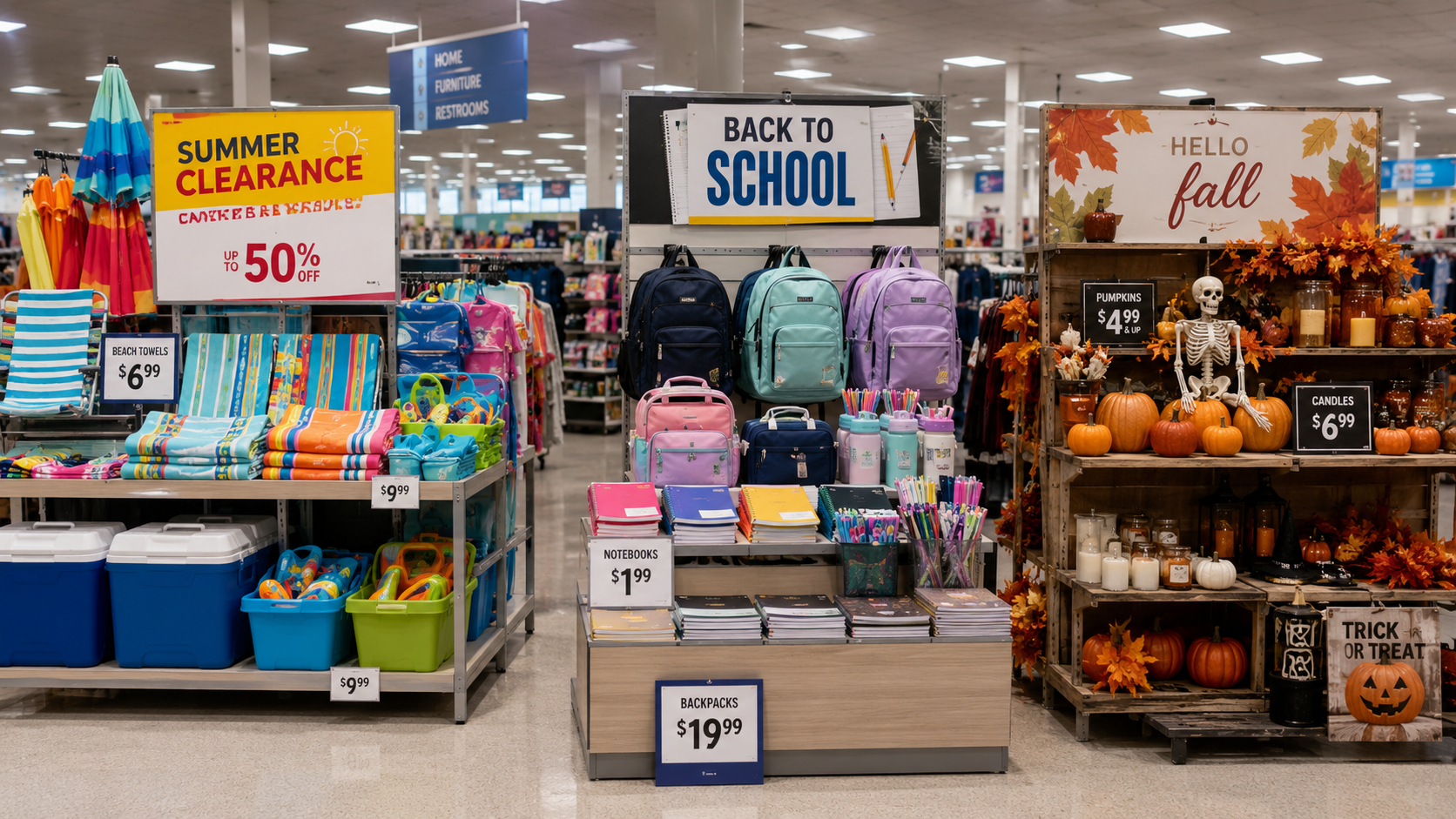
Retailers plan months in advance. Buyers commit to seasonal merchandise, distribution centers prepare for category transitions, stores reset floor space and marketing teams schedule promotions.
Consumers, however, respond to actual conditions.
If October feels like late summer, shoppers may postpone purchases of coats, fleece, boots, scarves, heaters and other cold-weather products. They may still need those goods eventually, but delayed purchases can leave retailers with less time to sell them before the next seasonal assortment arrives.
A shipment can arrive on time and still arrive ahead of demand. A retailer can execute its plan correctly and still experience slower sell-through.
Delayed demand does not automatically make merchandise excess inventory. It does, however, make an early review more important. Companies need to determine which goods should remain in the primary sales channel and which may benefit from another buyer, market or retail format.
Seasonal Excess Inventory: Why Timing Matters
Seasonal merchandise can come under pressure in stages.
Sales slow. Markdowns deepen. Floor and warehouse space are needed for other products. Merchandise originally intended for full-price sale may eventually need to move through closeout, discount, export or other secondary-market channels.
“The issue is timing,” says Allen R. Klein, president of the Allen R. Klein Company. “Seasonal inventory can still have real value, but that value depends on when a company decides to act. Waiting too long can reduce the number of buyers and the quality of the recovery.”
Evaluating inventory early does not mean liquidating it immediately. It means understanding the available options before the selling window narrows.
Goods that are current, properly packaged and available in meaningful quantities may still be attractive outside their original channel. Regional differences can also create opportunities: cold-weather merchandise that is slow to move in one market may be better suited to another.
“The best closeout opportunities often come before inventory is truly distressed,” says Roger Bolduc, vice president of operations at the Allen R. Klein Company. “Once everyone recognizes the problem, the market usually becomes more crowded. The earlier inventory is evaluated, the more options there tend to be.”
How Secondary Markets Help Preserve Seasonal Inventory Value
Liquidation is often viewed as a last resort after a product fails. That view overlooks the role secondary markets can play in an inventory strategy.
Closeout buyers, discount retailers, regional chains, opportunistic wholesalers and export customers can provide alternative outlets for merchandise that no longer fits its original sales plan.
The objective is not simply to clear inventory. It is to find an appropriate buyer while considering timing, recovery value and existing customer relationships.
That requires more than a list of available goods. Product condition, packaging, quantities, location and any sales-channel restrictions all help determine where merchandise can be placed.
The Allen R. Klein Company brings decades of closeout and liquidation experience to that process, helping businesses assess excess inventory and identify suitable secondary-market opportunities.
Questions to Ask Before the Season Gets Away
When seasonal sales fall behind expectations, retailers, manufacturers and distributors should review:
- Which products are selling more slowly than planned?
- Is demand delayed, or are other factors affecting sales?
- Which goods remain current, properly packaged and retail-ready?
- How much time remains before the next seasonal transition?
- Could another region, buyer or retail format offer a better opportunity?
- What customer relationships or sales-channel restrictions must be protected?
These are not simply end-of-season questions. They are part of active inventory management.
An early conversation with an experienced closeout buyer can help clarify the alternatives before deeper markdowns or storage pressures limit the choices.
Executive Insight: Review Early, Decide Deliberately
The traditional retail calendar still matters, but it does not always match the weather — or the customer’s readiness to buy.
When seasonal demand arrives late, companies need to distinguish a temporary slowdown from a developing surplus. Waiting may be appropriate for some goods. Other merchandise may be better positioned for a closeout sale or another market.
The stronger approach is to review inventory while it is still current and marketable, rather than waiting until a decision becomes urgent.
For the Allen R. Klein Company, this is where experience, market knowledge and buyer relationships matter. Seasonal merchandise may still have value outside its original channel. Recognizing that opportunity — and acting at the right time — is central to managing excess inventory.
Ready to Move Inventory?
Contact the Allen R. Klein Company today to learn how decades of experience and trusted relationships can help your company manage excess inventory.